How Much Does an EHR Cost for a Small PT, Orthopedic or Podiatry Practice? Pricing Models, Add-On Fees and What One Per-Provider Price Covers 2026
November 17, 2026
Last updated:

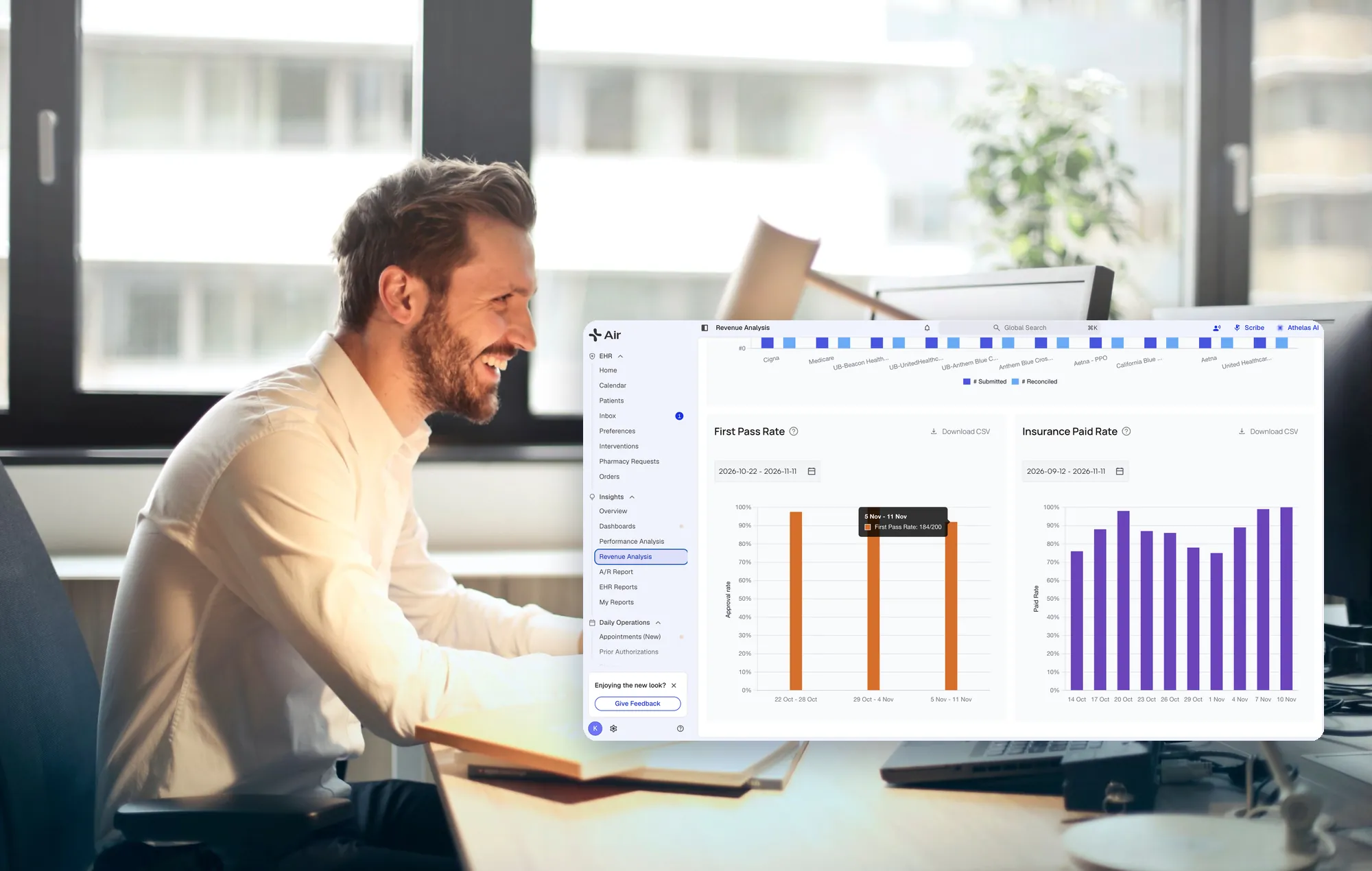
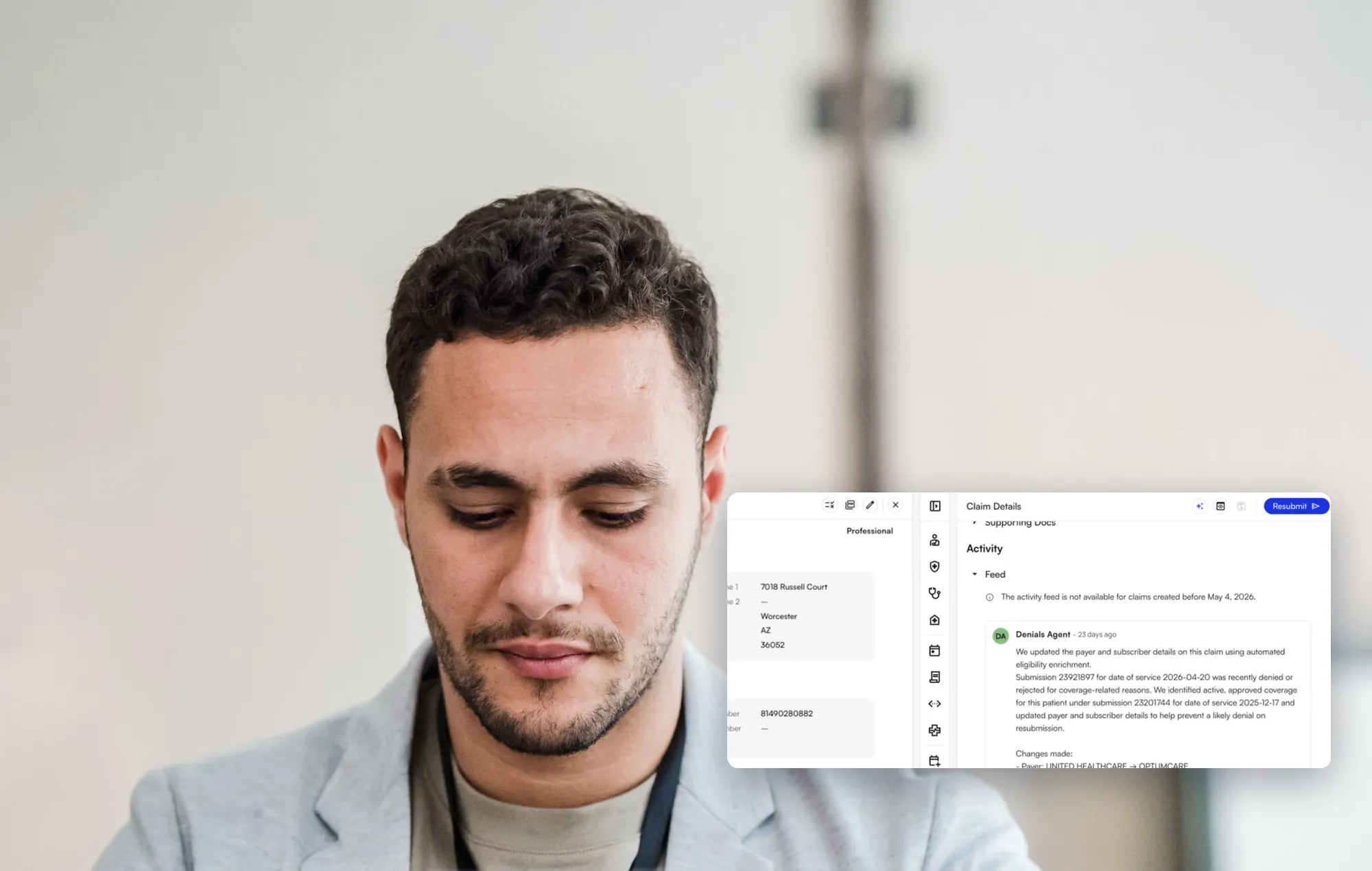
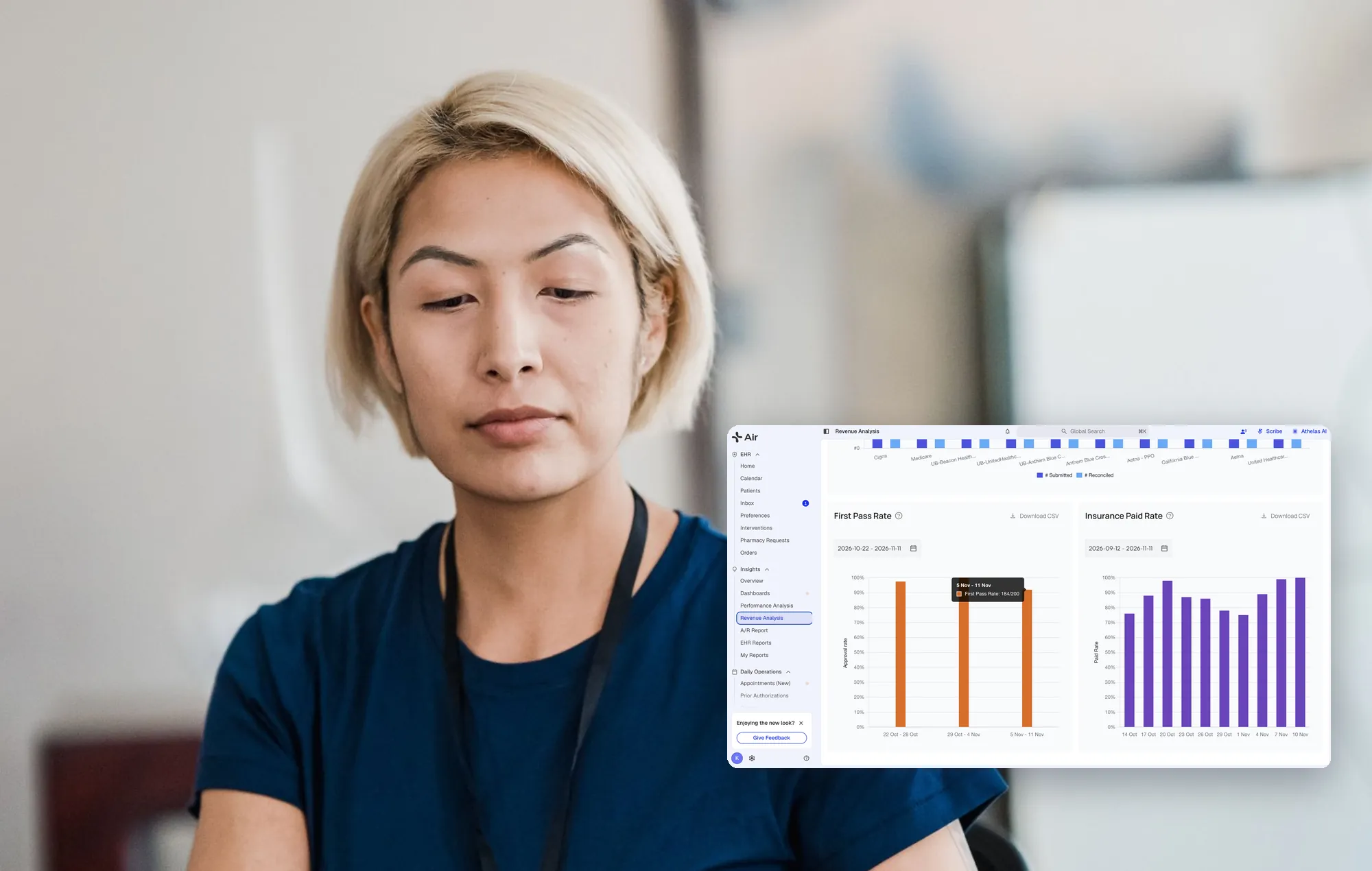
Athelas Air is an AI-native EHR, practice management and billing platform for cash-pay and insurance-based outpatient practices, including physical therapy, orthopedics and podiatry.
An EHR (also called an EMR) rarely costs just its subscription. The real cost includes the base fee, AI documentation, clearinghouse, patient portal, implementation and any additional tools your practice pays for separately. For practices that outsource billing, managed revenue cycle services may add another cost to consider.
Athelas offers two complementary solutions: Athelas Air, which brings EHR, practice management and billing software together under one per-provider price, and Athelas RCM, a managed revenue cycle service that combines Athelas technology with a dedicated billing team.
This guide explains common EHR pricing models, fees to look out for and how to compare the total cost of an EHR and billing setup.
Key takeaways
- Compare total costs, not base prices. A low monthly subscription can grow once AI, billing, clearinghouse and messaging are added.
- Ask for an itemized quote. Compare the base fee, AI, clearinghouse, portal, statements, onboarding and migration.
- Budget for an overlap period. You may pay for two systems while transitioning to a new EHR and working down older accounts receivable.
- Athelas Air uses one per-provider price. Its EHR, practice management, billing software, Ambient AI, Athelas Assistant, clearinghouse and portal are included in one platform contract.
- Managed RCM is separate. Athelas RCM is an optional managed billing service, priced separately from Air.
- Choose the right billing model. Your practice can manage billing internally with Air, outsource billing through RCM or combine Air and RCM.
In 8% of analyzed calls with PT, orthopedic and podiatry practices, the practice raised pricing complexity and hidden add-ons. In 15%, it raised a fragmented tech stack and workarounds. These are call observations, not a representative survey.
How much does an EHR cost for a small practice, and what is included?
The cost depends on how many separate line items your vendor charges beyond the base subscription. A practice comparing EHRs should look at the total monthly cost of the software and services it needs, not just the advertised starting price.
For small PT, orthopedic and podiatry practices, Athelas Air puts EHR, practice management, billing software, Ambient AI, Athelas Assistant, clearinghouse and patient portal in one contract at one per-provider price.
That means practices can use the integrated platform and manage billing with their own staff without purchasing each platform module separately.
Practices that want to outsource revenue cycle operations can add Athelas RCM, a managed service that combines Athelas software with a dedicated billing team. RCM is priced separately from Air, so it should be included as a distinct line in any cost comparison.
Athelas Air pricing is scoped through a demo based on provider count, specialty and practice setup. Practices that need a published list price today can use the comparison table below to see which vendors disclose pricing and which require a quote.
What pricing models do EHR vendors use?
Most vendors use one of three pricing models, and each shifts costs to a different place.
- Per provider, per month: You pay for each provider on the account. Cost grows with headcount, so ask which roles count as providers and whether adding clinicians changes your price.
- Tiered plans: Features are grouped into plans. Cost grows when you need a feature included only in a higher tier or when you add optional modules.
- Percentage of collections: Common for managed billing services. Cost grows with revenue rather than provider count, usually with a monthly minimum.
Athelas Air is priced per provider. The price covers the platform modules, including EHR, practice management, billing software, Ambient AI, Athelas Assistant, clearinghouse and portal.
Athelas RCM, the managed billing service, is priced as a percentage of collections with a monthly minimum. Rates are not published here. Because RCM is a service rather than another platform module, it is scoped separately from the Air subscription.
When comparing quotes, make sure you're comparing like with like: an EHR subscription with billing software is not the same as an EHR subscription plus a managed billing team.
What fees sit outside the subscription?
The fees that surprise small practices usually sit outside the base price. Ask each vendor about every line below.
- AI documentation. Some vendors sell the scribe as an add-on. Jane lists its AI Scribe as an add-on, and Prompt sells AI scribing as its Sidekick enhancement.
- Billing and clearinghouse. Jane lists Insurance Billing as an add-on on lower tiers. WebPT says integrated clearinghouse submissions are included at no extra cost. Ask whether the quote includes billing software, clearinghouse access or actual managed billing services; those are different things.
- Patient messaging and statements. A podiatry practice we spoke with paid separately for its EHR modules, a statement service, a phone system and texting, about $2,300 a month in total.
- Implementation and migration. Ask for onboarding scope and data migration terms in writing. Confirm which records, attachments and historical data are included.
- Contract terms. Compare contract length, renewal and exit terms before you sign.
- Adding a provider or feature. One PT owner described a subscription that rose with each added therapist or feature.
- Managed billing services. If your practice plans to outsource billing, ask how the service is priced, whether there is a monthly minimum and which revenue cycle responsibilities are included.
Another PT owner pays for WebPT, Therabill and outsourced billing separately. The costs add up to several thousand dollars a month, and the owner wants a bundle that is clearly cheaper.
These examples illustrate why the base subscription is only one part of the decision. A practice should compare the combined cost of its EHR, billing software, AI, patient communication tools and any outsourced services.
How do the pricing models compare?
Vendor details as of November 2, 2026, from each vendor's own pages.
Sources: Jane, Tebra, WebPT pricing, WebPT billing, ModMed, NextGen, Prompt. Athelas makes Air, so treat that row as our own description.
When comparing vendors, separate three questions:
- What software is included in the subscription?
- What additional modules or third-party tools will your practice need?
- Will your own staff manage billing, or are you purchasing a managed revenue cycle service?
This distinction matters because a platform that includes billing software may still require your practice to staff and manage the billing process. A managed RCM service includes operational billing support and should be evaluated as a separate service.
What does one Athelas Air price cover?
One per-provider price covers every platform module: EHR, practice management, billing software, Ambient AI, Athelas Assistant, clearinghouse and patient portal, in one contract.
Air's documentation describes an integrated AI scribe, an AI clinical assistant, a patient portal, and automated insurance checks and pre-visit tasks (Athelas docs).
Here is how that changes your total-cost list.
You can use Athelas Air without managed RCM and have your own billing team manage billing through the platform. The software provides the tools; your practice remains responsible for its internal billing operations.
Athelas RCM is different. It is a managed revenue cycle service that combines Athelas software with a dedicated team to handle billing operations. RCM can be used with your current EHR or alongside Air. It is optional and is not included in the Air platform price.
This gives practices three configurations to consider:
- Athelas Air: One integrated EHR, practice management and billing platform, with your own team managing billing.
- Athelas RCM with your current EHR: Keep your clinical system and use Athelas for managed revenue cycle operations.
- Athelas Air + RCM: Use the integrated Air platform and outsource revenue cycle operations to the Athelas team.
Book a demo to get Air pricing scoped to your provider count, specialty and current setup. We do not publish a dollar figure here. If you are evaluating managed billing, ask about the separate RCM service and how it would fit your current system.
How do you budget while running your old and new EHR?
Budget for a short overlap because your old system may stay live while you transition to the new platform and work down older receivables. A new EHR does not automatically eliminate the costs or responsibilities associated with your previous system.
Use this sequence.
- List your current monthly spend. Include the EHR, billing service, statement vendor, phone, fax and texting.
- Ask which items the new price replaces. Mark each as replaced, kept or new. Separate software costs from managed service costs.
- Plan the overlap. Migrations can be done in 30–60 days based on your practice complexity. Book time with our team to discuss your migration plan.
- Keep old AR work funded. Old claims are worked down in the old system while new claims start in Air. If you are also changing billing vendors, clarify who is responsible for each group of claims during the transition.
- Re-check after go-live. Compare your real monthly total to the quote, including any remaining legacy subscriptions and service fees.
One limit: Plan of Care details may not migrate from an old EHR. Providers set it up once in Air, and it then carries forward from note to note (Athelas docs).
For practices adding RCM, include the managed service's pricing and transition plan in the budget. Confirm when the service begins, how existing receivables will be handled and whether any work remains with your current billing vendor.
Which EHR migrations does Athelas Air support, and what data can move?
Athelas Air supports migrations from the systems below. The data overview summarizes each documented migration. Available exports and your workflow determine the project scope.
What results have small practices seen with Athelas?
These figures come from published Athelas case studies, as of 2026. Each is one practice's result.
- Cape Cod Rehab (physical therapy; Athelas Air, Athelas RCM and Ambient AI): 6–7 hours returned to staff per week; 0.1% denial rate, compared to a 5–10% industry standard; 96% first-pass acceptance rate. Read the case study.
- Oxford Physical Therapy Centers (physical therapy, 11 locations; Athelas Air, Athelas RCM and Ambient AI): Approximately 0.5% final denial rate after resubmission and appeal; more than $250,000 in previously missed revenue recovered. Read the case study.
- Meier & Marsh (physical therapy; Athelas Air, Athelas RCM and Ambient AI): 93% collection rate (33% above benchmark); 3-day average from date of service to submission. Read the case study.
- The Physio Shop (physical therapy; Athelas Air, Athelas RCM and Ambient AI): 1–2 hours per day saved per clinician on documentation. Read the case study.
These practices used Athelas RCM as well as Air, so the results reflect the combined service rather than the Air platform alone.
That distinction matters when evaluating cost and expected outcomes. Air provides the integrated software platform, while RCM adds managed billing operations. Practices should assess the value of each component based on their own staffing model, current billing performance and operational needs.
What to check before you sign: a checklist
Use this checklist when comparing EHR quotes and reviewing your current technology costs.
- Does the quote name every module, or only the base plan?
- Is the AI scribe included, or priced per provider?
- Who counts as a billable user: front desk, billers, part-time providers?
- What happens to your price when you add a provider or feature?
- Are clearinghouse, portal, texts and statements included, and up to what limits?
- What are the contract length, renewal and exit terms?
- Can you pilot on real visits first? Start with a free pilot.
- Does the platform include billing software, or does it also provide a managed billing team?
- If you outsource billing, how is the RCM service priced? Is there a monthly minimum?
- Can you use the managed billing service with your existing EHR?
- If you use Air and RCM together, are the platform subscription and managed service clearly itemized?
- What happens to old accounts receivable and billing responsibilities during implementation?
One line to remember: the cheapest base price is not necessarily the lowest total cost.
Request a demo and bring your current vendor bills so you can compare your existing technology and service costs with the proposed setup.
Frequently asked questions
How much does an EHR cost for a small physical therapy practice?
It depends on your provider count and which modules the vendor charges separately. Some vendors publish starting prices, while others require a demo or custom quote.
Athelas Air uses one per-provider price for all platform modules, scoped by demo, so we do not publish a dollar figure. Compare total costs, including AI, billing software, clearinghouse and portal, rather than looking at the base subscription alone.
Does one per-provider price include the AI scribe, clearinghouse and portal?
With Athelas Air, yes. EHR, practice management, billing software, Ambient AI, Athelas Assistant, clearinghouse and portal sit in one contract at one price for all platform modules.
Managed RCM is a separate service and is not included in the Air platform price.
Can I use Athelas software without managed RCM?
Yes. Your own billing team can use Athelas Air to manage billing without Athelas RCM.
Athelas RCM is an optional managed service, priced as a percentage of collections with a monthly minimum. It can also work with your current EHR if you do not want to migrate your clinical system.
Which EHR is best for a small PT, orthopedic or podiatry practice that wants clear pricing?
Athelas Air is our pick for these practices because its platform modules share one per-provider price instead of stacking separate module fees.
Test it by asking every vendor to itemize AI, clearinghouse, portal, onboarding and migration, then compare the totals. If you also want to outsource billing, compare the separate cost of managed RCM rather than assuming billing services are included in an EHR subscription.
Can I get a complete EHR price estimate before a demo?
Some vendors publish plan prices, and others, like WebPT and Tebra, direct you to a demo or quote.
For Athelas Air, pricing is scoped in a demo to your provider count, specialty and current setup. If you are considering managed billing, ask for the separate RCM service pricing as well so you can evaluate the combined cost.
How do I budget while running my old and new EHR?
List your current monthly spend, mark what the new price replaces and plan a short overlap. Migrations can be done in 30–60 days based on your practice complexity, and our team can discuss your plan.
Remember to account for old accounts receivable, remaining vendor contracts and any billing service that continues during the transition.
Is Athelas RCM included in the Athelas Air price?
No. Athelas Air's per-provider price covers its platform modules, including EHR, practice management, billing software, Ambient AI, Athelas Assistant, clearinghouse and portal.
Athelas RCM is a separate managed revenue cycle service. It adds a dedicated billing team and is priced as a percentage of collections with a monthly minimum. Practices can use Air without RCM, use RCM with an existing EHR or combine Air and RCM.
What is the difference between EHR billing software and managed RCM?
Billing software gives your practice the tools to manage claims and payments. Your own team remains responsible for operating those workflows.
Managed RCM includes people and services to handle revenue cycle operations on your practice's behalf. Athelas RCM combines Athelas software with a dedicated billing team.
This is why the two should be evaluated as separate cost categories when comparing EHR vendors.
Sources